Pan's Labyrinth - Opening Scene Analysis
Guillermo Del Toro’s Pan’s Labyrinth (2006) combines the harsh realities of post-Civil War Spain with the magical world of fairy tale fantasy. The film’s opening sequence immediately establishes the central themes of innocence, oppression and imagination, while introducing the audience to Ofelia, her mother Carmen and the authoritarian Captain Vidal.
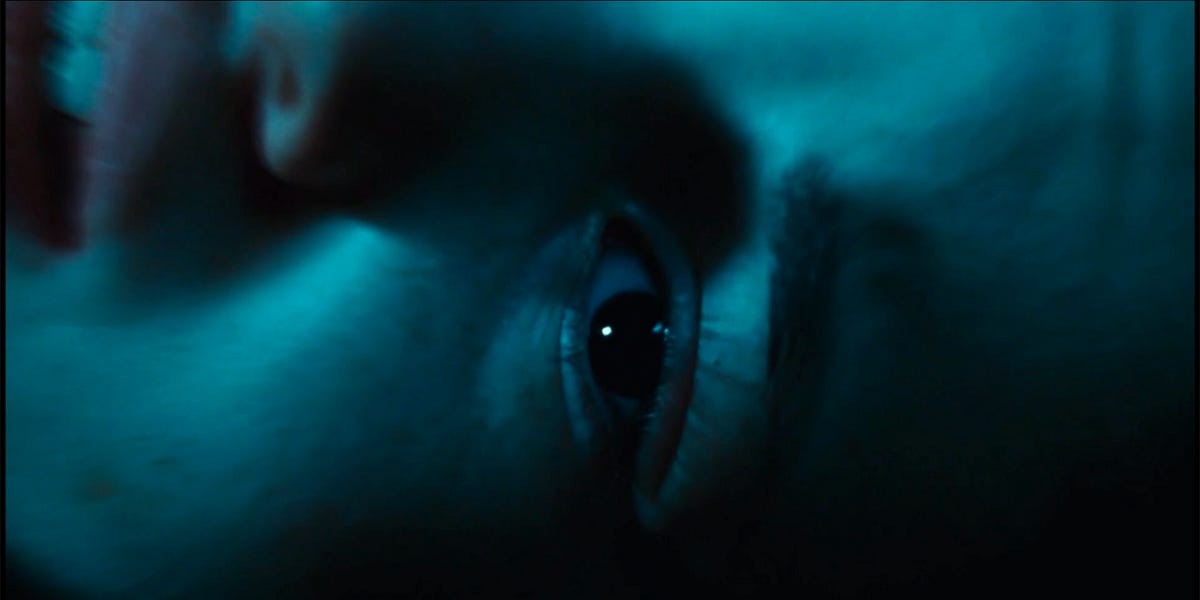
It’s through the use of film form that Del Toro visualises these themes. The sequence opens with Ofelia’s exaggerated breathing, a diegetic close-up that creates a claustrophobic atmosphere. A soft lullaby, uncertainly diegetic or non-diegetic, blurs the boundary between reality and fantasy. The close-up zoom tracking shot twists and spirals into her eye, representing her world turning upside down and raising the question of whether we are seeing reality or her perception. Low-key, cool-toned lighting casts shadows that emphasise the oppressive coldness of the real world, while the colour palette of blues, greys and blacks reflects Francoist Spain. These tones contrast with the warm golden hues seen later, underscoring the tension between reality and escapism. The blood on Ofelia’s lips symbolises violence and the brutality of the Civil War, while also evoking fairytale archetypes such as Little Red Riding Hood and tyrannical figures like the Queen of Hearts, echoing Vidal’s cruelty. This layering of historical and fantastical imagery ensures that from the very beginning, the film connects the brutality of fascism to the innocence of childhood.
Extreme wide tracking shots establish a dreamlike rhythm, immersing the viewer in escapism, while the sudden wash of white symbolises rebirth. Above ground, the derelict church and skull allude to Civil War destruction and also reflect on Del Toro’s critique of Catholicism. The crane shot situates Ofelia’s personal story within a wider historical context, and the lighter shadows reflect her naivety, symbolising the innocence of a generation born into war. The landscapes, scarred and lifeless, remind the audience that the consequences of war are not only physical but cultural, erasing traditions and shaping the identities of those forced to live in its shadow.
In the car, frequent cuts and static framing contrast the flowing rhythm of the fantasy world, while the warm, golden hues create a feeling of safety that directly opposes the cold, unwelcoming tones of the sequence before. Ofelia’s focus on her book underlines her desire to escape reality, reinforcing her innocence and naivety. Ofelia’s reliance on stories is more than escapism; it is her way of making sense of the brutality around her. The book acts as both a comfort and a guide, framing her as a child attempting to rewrite her reality through fantasy. In doing so, she becomes the embodiment of resistance through imagination, contrasting sharply with Vidal’s devotion to order and violence. The car itself is a symbol of Vidal’s rigid authority, confined, regimented, and militaristic, preparing the audience for the stark opposition between his world and Ofelia’s. Carmen, by contrast, is gentle in her parenting, softly urging Ofelia to close the book, showing her protective nature despite her frailty.
When the car stops, Ofelia wanders into the forest. The wormhole shot mirrors the flash of light that marked the transition from the underground kingdom, functioning as a visual threshold between two worlds and recalling fairytale tropes like Alice in Wonderland or Narnia. The camera’s close tracking of Ofelia suggests curiosity, moving as if it too is part of this world, intruding into spaces it shouldn’t. The camera does not just observe Ofelia but actively participates in her journey, drifting and lingering in ways that replicate childlike curiosity. This stylistic choice reinforces the idea that her imagination is not confined to her mind but becomes the lens through which the audience experiences the story. When she discovers the stone and approaches the statue, the diegetic background noise, such as dialogue, fades, centring her as the focus of the scene and reinforcing her role as a fairytale heroine, innocent yet brave, stepping further into a magical realm that is both enchanting and dangerous.
How men are presented in this film can be seen through two characters: Captain Vidal is authoritarian, violent and obsessed with legacy and control; he and the other soldiers represent Francoist Spain and toxic masculinity, valuing order, discipline and lineage over empathy. This can be seen when we first see Vidal: his opening line of dialogue is “15 minutes late”, emphasising his obsession with authority. He is also seen with a watch, a clear symbol of order, control and regiment. Other men in the film, such as the rebels and Doctor Ferrerio, represent resistance and quiet morality. The Doctor’s compassion and sympathy for Ofelia and her situation directly contrast with Vidal's, and the rebels’ passion subvert Fascist beliefs, showing that not all masculinity is toxic and dictatorial. This opposition between authoritarian masculinity and compassionate resistance frames much of the conflict.
However, Carmen is presented as weak and subservient. When we first meet Vidal, he insists that she sit in a wheelchair, claiming she shouldn’t exert herself. She attempts to resist, only to be shut down, and as she sits down, the camera lowers with her, visually representing the hierarchy between her and Vidal. This enforces the traditional views of Francoist Spain on women, self-sacrificing and powerless. Mercedes, however, is the opposite of Carmen; while she is outwardly obedient, she works with the rebels, representing female strength and rebellion, similar to the rebels. Mercedes’ dual role as servant and spy makes her one of the strongest characters in the film, proving that appearances can conceal defiance.
Ofelia represents innocence, imagination and purity. She represents the opportunity of disobedience and escape, not through outright rebellion but through creativity and fantasy. She is shown as vulnerable and powerless, similar to her mother, yet she is morally stronger; she sees truth and hope where others can’t, which is amplified by her ability to see the fantasy creatures where the adults can’t.
Childhood is shown as innocent, imaginative, and morally pure, with Ofelia using fantasy to resist trauma and authoritarianism. In contrast, adulthood is tied to repression and obedience. Yet Mercedes shows that adulthood can resist, proving that courage and imagination need not be lost. Ethnicity is framed through the divide between Vidal’s fascists and the rural rebels, who represent cultural identity and resistance. Mercedes, tied to this background, uses tradition and solidarity to oppose Vidal’s obsession with purity and order, showing ethnicity as a source of resilience against erasure.
The aesthetics of Pan’s Labyrinth are carefully constructed to reflect the film’s central themes of fantasy and fascism. Del Toro contrasts two distinct visual worlds: the harsh, cold aesthetics of reality and the warm, golden hues of fantasy. In the “real” world, the mise-en-scène is dominated by muted blues, greys, and blacks, creating a bleak atmosphere that mirrors Francoist Spain. Low-key lighting and sharp shadows emphasise oppression, while rigid, militaristic framing reflects Vidal’s authoritarian control. In contrast, the fantasy sequences adopt a more fluid and dreamlike aesthetic. Tracking shots glide smoothly through space, long takes unfold with hypnotic rhythm, and warmer lighting creates a magical, enchanting quality. Del Toro’s use of practical effects, detailed set design, and creature makeup further grounds the fantasy in a tactile reality, enhancing its authenticity. Ultimately, the aesthetic choices not only immerse the audience but also visualise the clash between innocence, imagination, and authoritarian violence.
The political context is presented in numerous ways; for example, the clothing reflects the time period in which the film takes place. Many of the women wear similar clothing, particularly Ofelia and her mother in the opening sequence, they wear heavy, colourless clothing reflecting the harsh control of Francoist Spain and the lack of individuality granted to women. Whereas the uniform worn by Captain Vidal and his soldiers is regimented and bleak, reflecting the loss of individuality in the military and the discipline expected under fascism. In addition, the colours of the uniform mirror the colour of the sequence at the start of the film, dark, oppressive and melancholic. Furthermore, it clashes with the lighting, making it dominate the shot, similar to the authoritarian control over Spain and its inhabitants at the time. The ruined church and surrounding landscapes symbolise both physical devastation and the cultural consequences of conflict, reminding the audience that war reshapes not only lives but also entire societies. Together, these visual choices embed the characters within their historical moment, situating Ofelia’s fairytale journey in the shadow of fascist oppression, and ensuring the political context remains central to the film’s atmosphere and meaning.
In conclusion, Guillermo Del Toro’s Pan’s Labyrinth uses film form, aesthetics, and symbolism to weave together themes of innocence, oppression, and resistance within the historical context of Francoist Spain. By contrasting the rigid, militaristic world of Captain Vidal with the fluid, dreamlike fantasy experienced by Ofelia, Del Toro highlights the tension between authoritarian control and the liberating power of imagination. Men, women, and children are presented in starkly different roles: men embody either violence or quiet resistance, women are caught between submission and rebellion, while children, particularly Ofelia, represent purity and hope. The film’s aesthetics, from its contrasting colour palettes to its camera movement and practical effects, reinforce these divisions and immerse the viewer in both the brutality of war and the enchantment of a fairytale. Ultimately, Pan’s Labyrinth is not just a dark fantasy but a powerful allegory, showing imagination as a vital form of resistance against tyranny.
Post a comment